
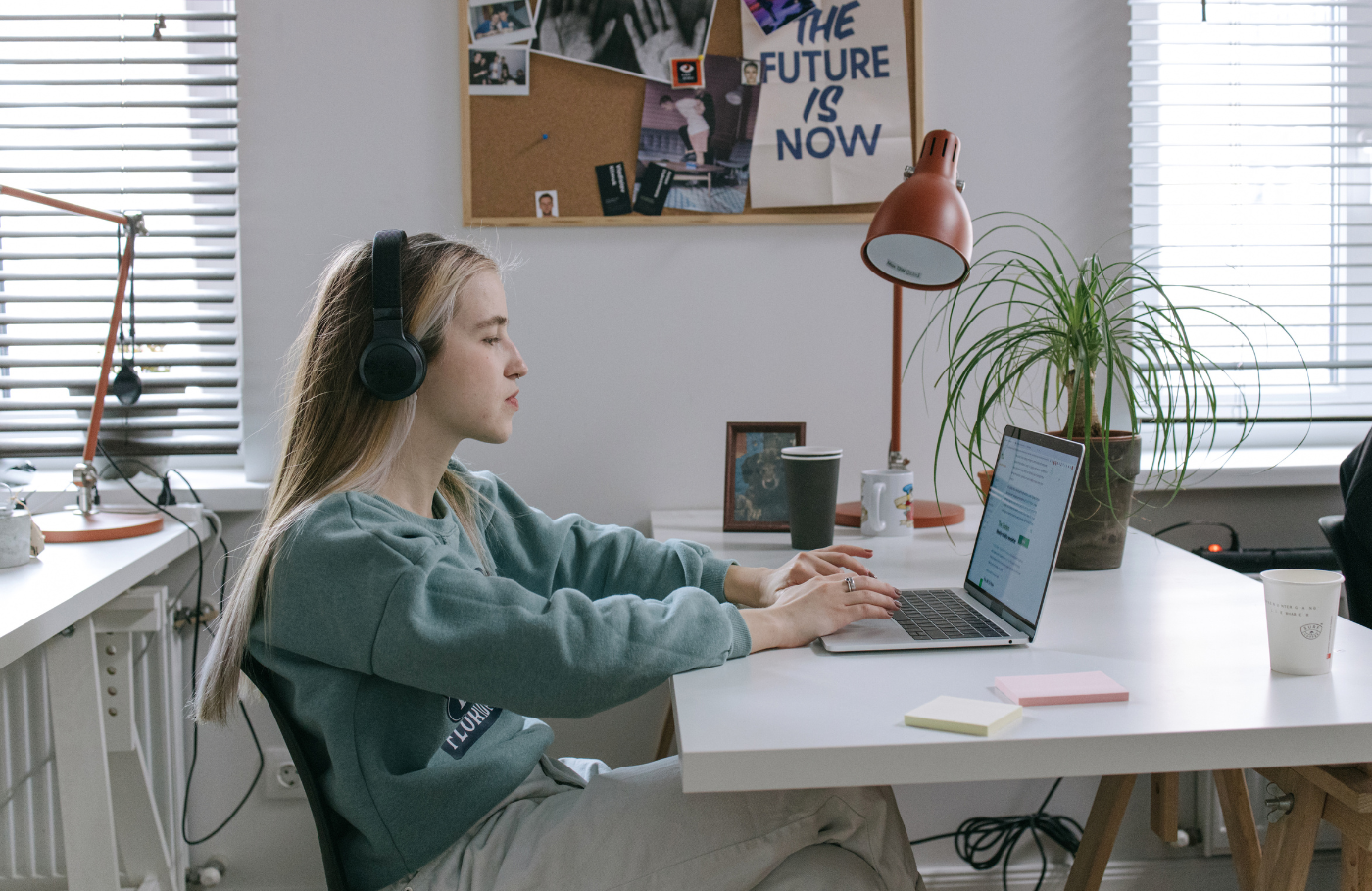
A well-designed home study space can significantly improve students’ focus and positively impact learning outcomes. For parents and guardians, it can be difficult to know where to start in creating a set-up that will help your child study. Just remember, it’s not about creating the perfect space but creating a space that suits your child’s age and most importantly, their learning style.
Whether your child is in primary or secondary school or in third-level education, a supportive study environment can help them to get more value from their homework, revision and tutoring sessions.
Our top study space tips
- Choose the right location
The best study space is:
- Quiet but not isolating
- Free from constant foot traffic
- Away from TVs and gaming devices.
For younger children, a shared family space (like the kitchen table) may work better than a bedroom. Older students often benefit from a dedicated desk where they can build routine and independence.
Tip: Consistency matters more than size; using the same space regularly trains the brain to switch into “study mode”.
- Consider comfort and posture
Maintaining focus and concentration will be difficult if your child is experiencing any discomfort with their set-up. It helps to ensure:
- The worktop and chair are suited to your child’s height
- They have room to place their feet fully on the floor
- Books/iPads are at eye level.
Good posture reduces fatigue and improves concentration, which is particularly important for longer homework sessions or one-to-one tutoring.
- Good lighting is key
Poor lighting leads to eye strain and loss of focus. It may be helpful to consider:
- Spaces with lots of natural light where possible
- A desk lamp for darker evenings
- Warm but bright bulbs (not harsh white)
- Positioning light sources to avoid shadows on books or screens.
- Keep it simple
An effective study space is functional, not cluttered. We recommend trying to avoid toys, clutter, unnecessary devices and anything else that may cause distraction.
It is handy to have the below easily available in the study space:
- Pens, pencils, calculator, ruler
- A notebook or planner
- Subject-specific folders.
Tip: For younger children, use labelled boxes or colour-coded folders to encourage independence and organisation.
- Personalise the space
A small amount of personalisation helps students, no matter what age, feel ownership of their study area. Options to personalise the space include:
- A timetable or goal chart
- Encouraging quotes
- A progress tracker
Avoid overstimulation; the goal is focus, not distraction.
- Make the space tutor friendly
If your child works with a home tutor or online tutor, the space should support structured sessions. Consider:
- Clear desk space for materials
- Reliable internet connection
- Minimal background noise
- Access to school books and notes.
A consistent setup helps tutoring sessions run smoothly and reinforces routine.
- Adapting the space to your child’s learning style
Different children need different setups:
- Visual learners: charts, diagrams, colour-coded notes
- Auditory learners: quiet space for discussion and explanation
- Hands-on learners: physical room for writing, problem-solving and interaction
Observing how your child works best will help you adjust the space over time.
8. Review and adjust as your child grows up
What works for a seven-year-old won’t be the same as what works for a 15-year-old.
We recommend revisiting the study space set-up periodically:
- At the start of each school year
- Before exam periods
- If motivation or focus drops
A flexible approach ensures the space continues to support learning rather than hinder it.
Takeaway message
Creating an effective home study space isn’t about expensive furniture or strict rules; it’s about supporting your child’s learning habits and independence and creating a welcoming space that is conducive to productivity. Combined with good routines and tailored support, the right environment can make a lasting difference.